
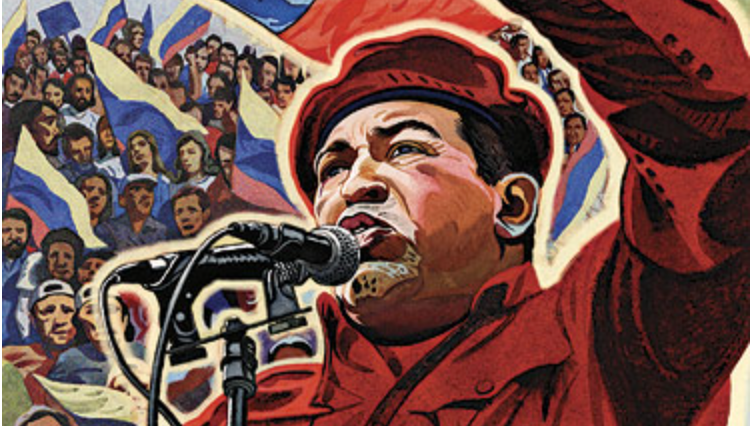
Constant training is important for active, informed citizenship. At the National Civic Movement, we organize monthly training activities for citizens interested in researching and learning more about various topics.
In July, Carrol Ríos de Rodríguez joined us to discuss 21st-century socialism. The expert on the subject provided a historical overview of socialism, explained its characteristics, and how we can react to this ideological current.
Ríos studied Political Science and Economics at Dartmouth College in New Hampshire and earned a master's degree in Latin American Studies from Georgetown University in Washington, D.C. She has also been a columnist for various media outlets and a university professor at Francisco Marroquín University. Currently, she is the president of the Faith and Liberty Institute.
If you wish to participate in one of our training activities, please send us your information here.
Capitalism and Worker Exploitation: Karl Marx (1818-1883)
The expert's historical overview of socialism began with Marx. Ríos explained that Marx was the person who criticized capitalism as a system of worker exploitation.
It is Marx who coined terms like the Bourgeoisie and grouped us into classes. It is the Bourgeoisie, through its control over capital, that exploits the proletariat.
Marx also discusses historical materialism and how history emerges from social classes, ideologies, and political structures. It is materialism that dictates our consciousness.
He speaks of overcoming capitalism by transcending certain historical stages. Its final stage is the dictatorship of the proletariat leading to communism, without state or oppression.
Praxis and Imperialism: Vladimir Lenin (1870-1920)
To continue with the historical overview, the expert explained that Marxism was complemented by the real experiences of the Soviets. Lenin complemented this vision by implementing the Marxist revolution, but not with workers, but with peasants. This was carried out in a more agrarian, not working-class, Russia.
There is a series of changes, and the revolution that Lenin carried out was imperialistic and internationalist in nature. It tended towards a world government that ruled over a single system.
Leninism completely rejected liberalism. Lenin succeeded in placing 1/3 of the 20th-century population under his ideas.
From Leninism to the Totalitarian State with Joseph Stalin (1878-1953)
From Leninism, there was a leap to the totalitarian state. Licenciada Ríos explained that this was built under a single, totalitarian, and police-controlled party. Stalin implemented rigorous economic plans for industrialization, central planning, and collectivization.
It was then that the cult of personality began ("enemies of the state"). On the other hand, the persecution of cultural figures such as religion, family, culture, etc., also began. Classicide, purges, concentration camps, and terror also began.
Socialism arrived in Latin America from that time.
Cultural Marxism: Antonio Gramsci (1891-1937)
In her historical overview, the panelist highlighted the topic of cultural Marxism. Licenciada Ríos explained that this Marxism speaks of a dominant class that exercises cultural hegemony. She indicated that Gramsci speaks of proletarian intellectuals who must oppose bourgeois intellectuals and transform people's ideas about:
- Religion
- Education
- Family
- Politics
- Media
- Unions
- Literature
- Arts
- Sports
Gramsci believed that it was necessary to conquer power through this cultural penetration of society. On the other hand, he believed that this comes before political power and is achieved through the concerted action of intellectuals.
Intellectuals are those who infiltrate the media, expression, arts, and Universities.
The Nonsense Machine of Authors like Louis Althusser (1918-1990) and Gilles Deleuze (1925-1995)
The expert noted that these authors began to write in prose that is quite obscure and obtuse. Some examples include:
The axioms of Marxist theory appear in Althusser's prose as blinding flashes of total darkness, within clouds of gray on gray.
Roger Scruton
It is here that George Orwell's concept of Newspeak emerges. This concept refers to things with terms that are the opposite and redefine terms.
The idea is to speak in a circular, hermetic way, to speak in such a sophisticated and strange way. Nobody else understands me, and that's why I am the intellectual.
We are imprisoned by similarity and have been liberated by difference!
Deleuze
Dependency Theory (1960s-70s)
The expert pointed out that all these influences are reaching Latin America, as the region has always been influenced by European intellectuals.
With the establishment of the Economic Commission for Latin America and the Caribbean in 1948, the first president of ECLAC was Raúl Prebisch, an Argentine economist who proposed structuralism.
Structuralism proposed that Latin America has not developed as much as first-world countries because trade between us implies unfavorable terms of trade for Latin America.
The underdevelopment of the Periphery is linked to the expression of developed countries (CENTER). Prebisch creates internal structures of exploitation in Latin American societies.
On the other hand, there are authors like Andre Gunder Frank, who argue that peripheral countries should cut ties with the first world and seek economic development independent of them. Achieve economic autarky because first-world countries always harm us.
This is a rather radical view of international trade. What these authors propose is that trade with the first world generates conflicts, exploitation, and people who benefit from relations with the center within their own society.
Liberation Theology in Socialism
On the other hand, another element is liberation theory. This theory is dependency with phrases from the gospel, explained the Expert. If Jesus Christ had lived in our time, according to liberation theologians, he would have been a revolutionary.
Furthermore, he would have taken up arms and opted to make heaven on earth, and would have taken the side of the oppressed against the oppressors. The main author of liberation theology is Gustavo Gutierrez.
Revolutions in Cuba (1959) and Nicaragua (1979)
The expert explained that one of the important issues surrounding this is to compare the Cuban Revolution with the Nicaraguan one over time.
For its part, in the Cuban Revolution, there was a band of guerrillas trying to develop a focal guerrilla or small nuclei. On the other hand, in Nicaragua, it was a more political strategy, where there was talk of forming alliances with Somoza's opponents to overthrow the regime.
The Cuban Revolution quickly became pro-Soviet, and Nicaragua maintained a more ambiguous position.
On the other hand, in the Cuban Revolution, atheism developed rapidly, while in Nicaragua, there was revolutionary Christianity. In Nicaragua's case, Christians were directly involved in the revolution and even held political positions.
Finally, in the Cuban Revolution, nationalizations and expropriations were seen to bring about a drastic economic transformation. While in Nicaragua, it happened more gradually, and a mixed economy existed.
In the Cuban Revolution, there was repression of the opposition, and in Nicaragua, a facade of greater freedom. However, both had one thing in common: the number one enemy was the United States.
A Neoliberal Decade?
The expert explained that there is a neoliberal decade in Latin America characterized by privatizations, attracting foreign investment, and deregulating the economy. This is the neoliberal era.
On the other hand, if there is aid or a welfare state, they try to focus on specific sectors. Finally, neoliberalism proposes incorporating into a globalized economy by exporting goods produced in our region.
The 21st-century socialism alludes to this neoliberal decade.
After the 90s and this neoliberal era, many countries began to elect left-wing presidents. Some examples include:
- 1998: Hugo Chávez in Venezuela
- 2000: Ricardo Lagos in Chile
- 2002: Lula da Silva in Brazil
- 2003: Néstor Kirchner in Argentina
- 2005: Tabaré Velásquez in Uruguay and Evo Morales in Bolivia.
- 2006: Michelle Bachelet, Rafael Correa, and Daniel Ortega
- 2007: Cristina Fernández and Alvaro Colom
- 2008: Fernando Lugo, Paraguay
- 2009: Mauricio Funes, El Salvador, Rafael Correa (re-elected), Jose Mujica, and Evo Morales.
The expert recommended the author Marta Harnecker (1937-2019) who describes the project of 21st Century Socialism. What they have in common is that:
- They are preceded by popular movements (better known as populism)
- Heterogeneous leadership: there is no single recipe, and it can be done in different ways in different countries.
The legacy of neoliberalism, according to 21st-century socialism in the region, is inequality, contradiction, malnutrition, crisis, unemployment, and environmental destruction.
What is 21st Century Socialism?
The expert explained that this is based on a human being who is social. This will be done through the participation of the individual in development and politics. They believe that part of the error committed by the USSR was that a hierarchy of command and internal structure still existed.
What 21st-century socialism dreams of is a more horizontal plan where the individual is directly involved, and they are entrusted with participating in the formation, execution, and control of public management.
Chavez proposed an elementary triangle of socialism in economic terms:
- Social ownership of the means of production
- Social production organized by workers
- Satisfaction of communal needs.
Regional Integration in 21st-Century Socialism
Sao Paulo Forum
The expert explained that regional integration is key in this movement. One example is the Sao Paulo Forum (1990), bringing together not only left-wing political parties but also social movements. More than 100 organizations make up the Forum.
Currently, there are 9 countries governed by members of the Sao Paulo Forum: Argentina, Bolivia, Cuba, Dominican Republic, Mexico, Nicaragua, Panama, Peru, and Venezuela.
Ríos explained that they tend to exert a lot of pressure on countries where there are no elected presidents in the region, supporting each other.
When Venezuela still had funds from oil exports, it financed many political campaigns to gain power in different countries.
It is in the forum where they agree on the agenda. For example, at this moment, the topic of discussion is racism, environmentalism, classism, and xenophobia. There are guidelines for the terms that should be used and the issues they will combat.
Puebla Group
In July 2019, the Puebla Group was founded, which could be the successor to the Sao Paulo Forum, as the latter is quite discredited. There have been many problems with some of its leaders, such as Nicolás Maduro and Lula Da Silva, in addition to the discrediting of the Cuban regime.
We invite progressives to build a new common project that, learning from our mistakes and recovering our vocation for majorities and government.
Puebla Group Call
Change of Institutional Rules
Licenciada Ríos explained that another important aspect for 21st-century Socialism is to change institutional rules through new constitutions. For example, in Venezuela, the Bolivarian revolution with the right of indefinite re-election for the governing leader.
On the other hand, educating young people and indoctrinating them in socialist philosophies. Transforming the army and turning it into something eminently revolutionary. Furthermore, it is important to have a strong media presence. Finally, burying the inherited state.
They no longer try to access power through a violent revolution but through elections. But once they gain power, they want to completely transform the structures of society so that they become entirely different countries.
The panelist explained that socialism is unviable, harms the majority, and is an instrument of domination for the masses through political manipulation.
BEWARE of 21st Century Socialism
In the United States, 54% of GEN Z (18 to 24 years old) have a negative view of capitalism. On the other hand, 51% have a positive view of socialism.
These ideas have taken root in education, culture, religion, and race. It's attractive to "be progressive," the expert highlighted.
The expert explained that one of the recent cases is Chile, where they want to reform the Constitution and make a structural transformation of the Chilean economy and society.
How to react to 21st Century Socialism?
- It is important to distinguish between mercantilism and capitalism. The expert explained that many of the things young people see as negative about capitalism are due to mercantilism.
- Another strategy is to go to L. von Mises and the Theory of Impossibility to prove that socialism is impossible because economic calculation cannot be done, and to remind a new generation of this.
- It is important to make a historical overview of what was experienced in the Soviet Union, all the violence with the concentration camps and the terror that many of those who were subjected experienced.
- It is important to talk about socialist fraud.
- Talk about the sense of community, it's not that capitalism is individualistic, we understand community differently, and we care about inequality and poverty just the same.
- Testimonies from former socialists
- Protect values and inalienable rights, just as in Cuba, people are taking to the streets to defend their rights, the expert highlighted.