
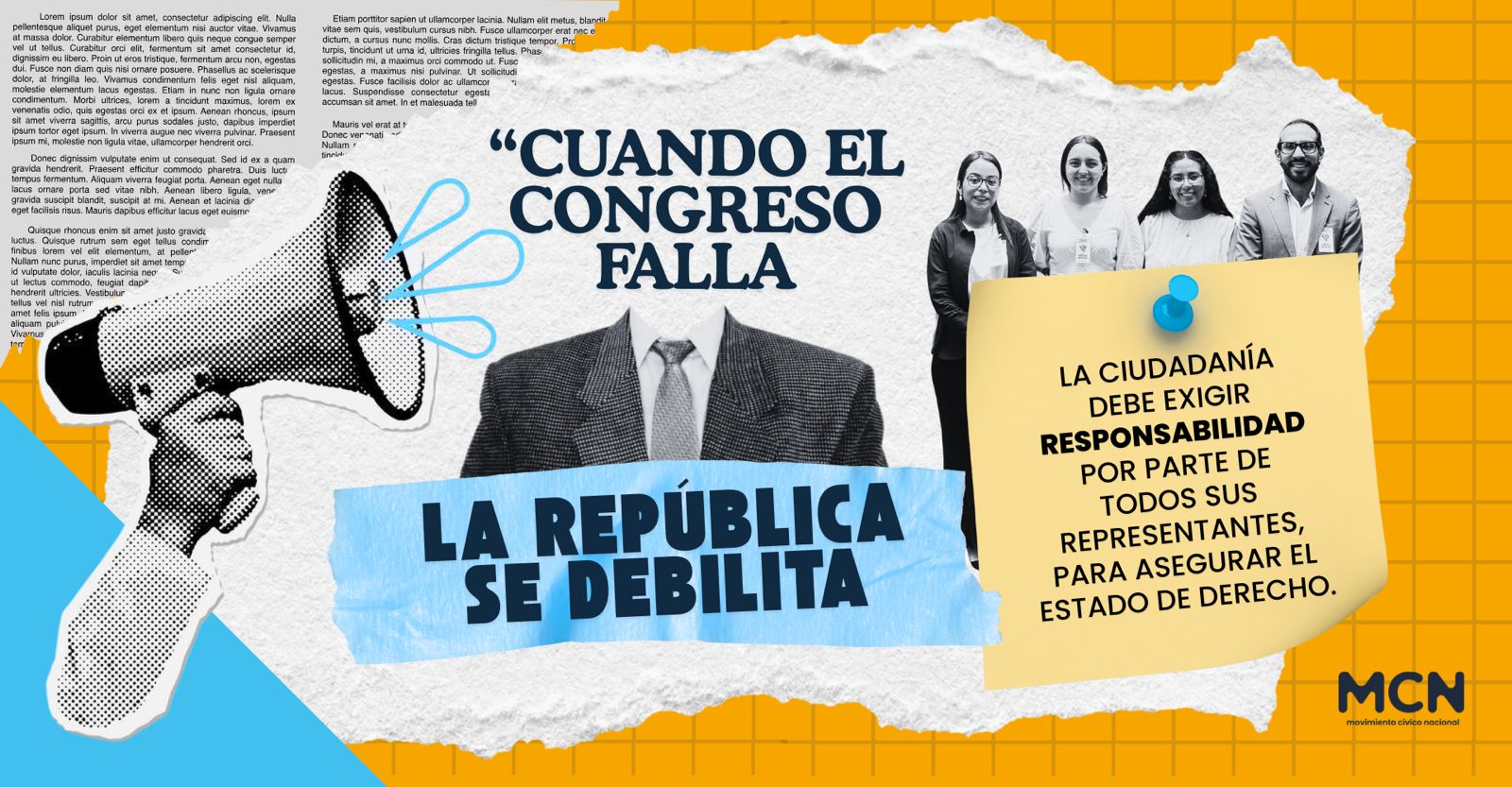
However, in 3 weeks, the necessary quorum was not reached at the Bloc Board meeting, not even to define an agenda, leaving aside all other pending issues, including the repeal. This institutional silence is something Guatemala cannot afford.
Finally, after 3 weeks, a quorum was achieved, but the repeal was not on the agenda. The closest attempts occurred in the middle of the sessions. On March 25, the motion only received 42 votes, and on April 29, 55 votes. No proposal prospered due to lack of quorum, as at least 81 votes were needed. Meanwhile, the National Civic Movement was present in Congress, overseeing the process and demanding compliance with the basic principles of transparency and public accountability.
This legislative silence reflects the discretionary use of rules, meaning that processes currently appear not to be subject to clear norms and depend on the discretion of the deputies, who simply decided not to attend the sessions. It is clear that this omission was not a simple oversight, but a deliberate strategy to avoid discussion and shirk their professional responsibility, which weakens representativeness and accountability. This not only goes against transparency but also against what the law establishes regarding the responsibilities of deputies, according to Article 165 of the Political Constitution of the Republic of Guatemala and Article 55 Bis of the Organic Law of Congress.
We wonder why, despite motions being presented to repeal the salary increase, they did not receive the necessary support to be approved. What does it say about our representatives that they did not even participate in the discussion? Their absence demonstrates disinterest in public spending, a lack of professional responsibility, and a complete disconnection from their representative role.
Deputies are there to serve. Not to serve themselves.
Let's remember that the salary increase was approved in November 2024. Despite public criticism and the legal actions filed to reverse the increase, the Constitutional Court has rejected several appeals seeking to annul it. On March 25, the Congressional Board of Directors announced, through a conference, the temporary suspension of the salary increase. This decision required the approval of the full body, which did not materialize. During the ordinary sessions, the motion to repeal the increase had to be approved; however, the sessions concluded, and it did not pass. Meanwhile, deputies have been earning their salary with the abusive increase for 6 months.
For months, deputies have only defended their interests, ignoring those of the citizens. So, what will it take for the needs of the citizens to be taken into account?
The solution is the reform of the LEPP!
In the face of this legislative omission, the reform of the Electoral and Political Parties Law (LEPP) becomes more urgent than ever. It is not just about repealing an unjustified salary increase, but about correcting the rules that allow this type of abuse, without consequences. Reforming the LEPP translates into better representation, which promotes active citizen participation and, at the same time, guarantees transparent processes. Including mechanisms such as open lists, sub-districts, and lower entry barriers will bring us closer to a Republic where deputies fulfill their representative role. If this reform is not carried out, the problems of disinterest, irresponsibility, and lack of accountability will continue to repeat election after election, distancing Congress further and further from the citizenry.
To what extent will the guarantee of the Republic in Guatemala continue to be jeopardized?
Citizens must demand accountability from all their representatives to ensure the Rule of Law, accountability, and a true Republic in Guatemala. But this demand also implies taking an active role, being responsible citizens who get involved, stay informed, and participate. Therefore, if you want to be part of this civic community, learn about our actions to strengthen the Republic, and start your path toward citizen leadership, follow us on social media and visit our website. We look forward to seeing you!