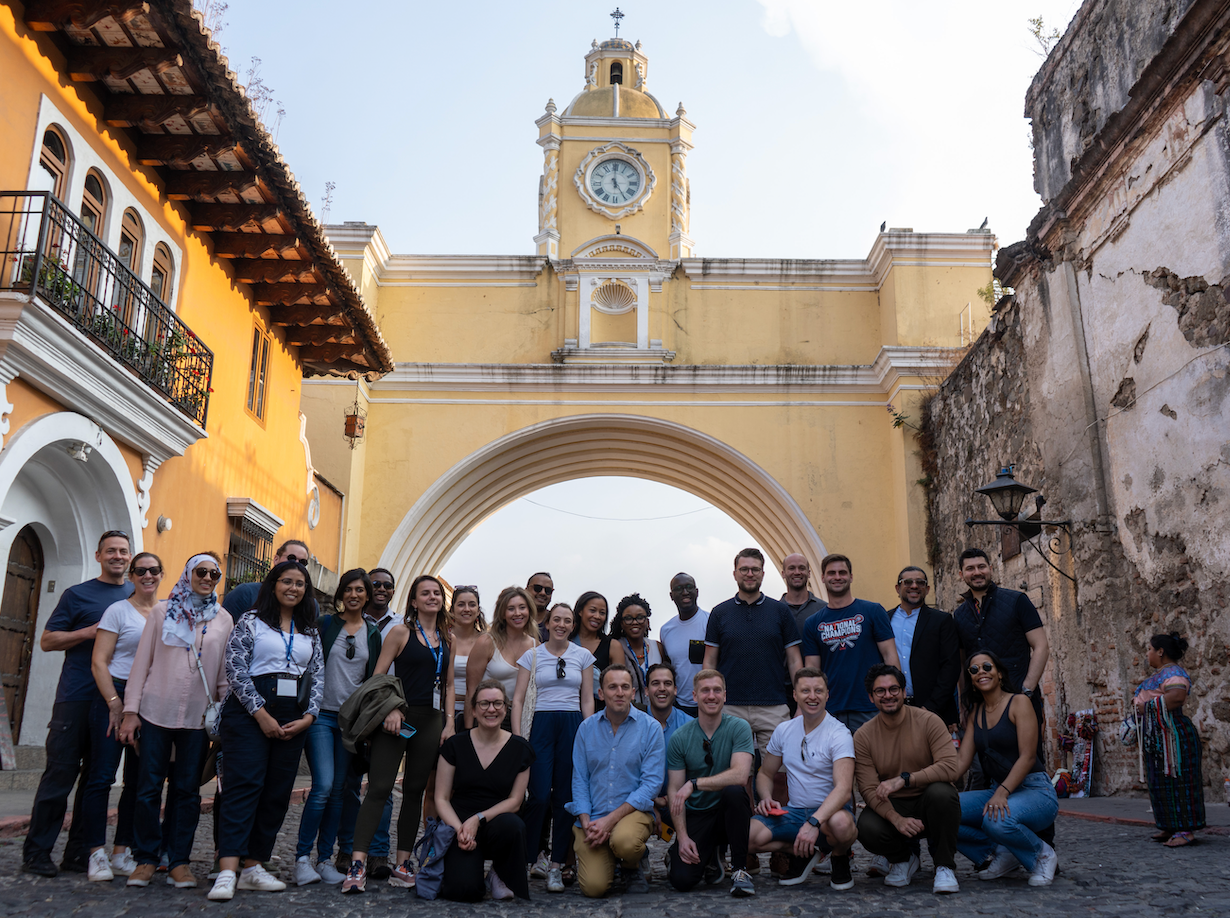
More than 25 professionals from various sectors (public and private) worldwide gained firsthand insight into Guatemala's political, economic, diplomatic, and environmental situation.
Last March, we had the pleasure of hosting emerging professional leaders from different sectors who are part of the Millennium Leadership Program in Guatemala. This program brings together leaders from around the world for a year. During this period, they enhance their leadership skills and increase their capacity to make a significant impact in their communities.
Together with the Atlantic Council, the American think tank that promotes this leadership program, we carried out their annual exploratory study trip. The chosen destination country for 2023 was Guatemala. The participants visited our country to apply the resources learned and gain access to a geopolitically nuanced experience.

More than 25 professionals from various areas (public and private) worldwide learned firsthand about the political, economic, diplomatic, and environmental situation in Guatemala, delving into the challenges and opportunities of a complex country. At the same time, they had the opportunity to learn about Guatemala's history and cultural heritage.
Three locations: Antigua Guatemala, Guatemala City, and Flores
Participants understood how Guatemala is overcoming various challenges in innovative ways, striving for the development of its people. This was achieved through a series of visits, discussions, and workshops with Guatemalan stakeholders who work hard for the country's development.
During their visit to Antigua Guatemala, Sacatepéquez, the Millennium Leadership Program participants immersed themselves in Guatemala's history.

In San Juan, Sacatepéquez, and Guatemala City, they heard from various citizen leaders and entrepreneurs about experiences and business projects aimed at enhancing the human capabilities of the Guatemalan population, as well as the social impact these can have in promoting inclusive economic development.
During the Petén portion of the study trip, participants explored the cultural heritage located in Tikal and other archaeological sites, thus better understanding where we come from and where we are going.
These synergies demonstrate how crucial it is to share what is being done in Guatemala. Through the "Institutional Projection" pillar, at the Movimiento Cívico Nacional, we have formed relationships and strengthened alliances to make this type of collaboration possible. We believe it is valuable to learn from others and share the experiences we have in the country. It is important to continue collaborating internationally on a common agenda to achieve the expected development. This is in the spirit of finding solutions to shared problems.

It was evident to the participants the factors that differentiate Guatemala from the rest of the Central American countries. They were thus exposed to how the country is currently traversing global trends.