

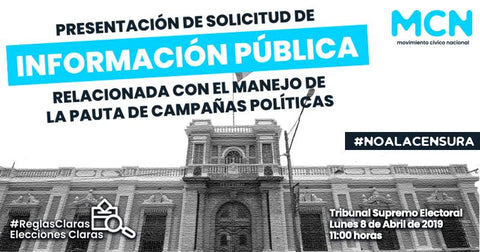
Where is the electoral advertising? Kicking off the fourth of twelve weeks of electoral campaign, Guatemalan citizens are asking important questions: Who are the candidates? What are their proposals? Where is the political parties' advertising?
That is why, as a movement, today we submitted the following public information request to the Supreme Electoral Tribunal:
- How are the taxpayers' 78 million quetzales being used to pay for electoral advertising?
- What criteria were used to approve the registration of media outlets to distribute electoral advertising?
When information dissemination is hindered, the informed vote suffers.
Free information is essential for democracy.
New regulations on electoral advertising
The main changes made by Congress in 2016 to the Electoral and Political Parties Law (LEPP) related to electoral advertising are:
- All electoral advertising is paid for with public funds.
- The Supreme Electoral Tribunal contracts directly with registered media outlets.
- The Supreme Electoral Tribunal distributes the advertising among the different media outlets.
- The amount to be paid is 20% of the commercial value, averaged across all registered media outlets.
What do we seek to protect?
This action aims to oversee the proper use of public funds, ensure that all registered media outlets receiving payment for electoral advertising comply with minimum requirements. It also seeks to protect the constitutional principles of freedom of expression and freedom of contract. In summary, it ensures that information reaches citizens and evaluates the impact of the reforms.
It is common for excessive regulations to have the opposite effect of what they intend. In this regard, these reforms seek equality among political parties, but it is important to analyze whether such egalitarian regulations do not tend to favor more well-known parties and candidates, thus achieving the opposite effect of their intention.
