
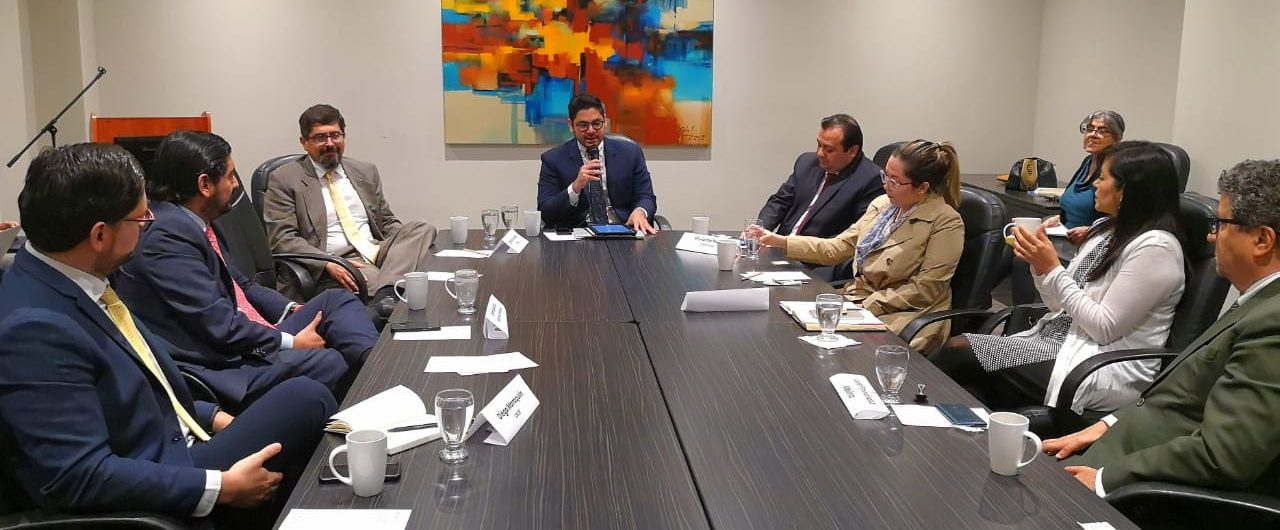
On October 22, we held the first dialogue on The Future of Justice in Guatemala with the aim of addressing issues surrounding the election of magistrates to the Judicial Branch. The discussion focused on analyzing the consequences of the provisional injunctions granted by the Constitutional Court on September 16 on the nomination commission process. Given the importance of electing magistrates in our republic, it is necessary to propose citizen solutions in the face of the failure to appoint magistrates within the constitutional deadline.
The event featured representatives from various organizations, including Marielos Fuentes from Guatemala Visible, Stuardo Ralón from CEDECON, Diego Marroquín from CACIF, César Sigüenza from Fundación 2020, María Fernanda Galán from ASÍES, Ignacio Andrade from ADER, Luis Fernández Molina, former magistrate of the Supreme Court of Justice, and was moderated by Jose Echeverría, who presides over the National Civic Movement.
Here is a summary of the topics discussed:
- Mr. Sigüenza commented that we are facing an institutional crisis that reflects major failures in the Guatemalan system. He stated that this crisis should not be addressed in isolation, but rather requires an institutional strengthening approach for the justice sector to ensure legal certainty and prevent the violation of the constitutional order; similarly, the weaknesses that have led the judicial system to this crisis must be resolved. (we recommend reading: justice in Guatemala).

Mr. Marroquín added that institutional strengthening should not be viewed abstractly but rather materialized in concrete actions. The Guatemalan reality shows us how profound the lack of institutionality is. The justice sector affects all Guatemalans, and we must not neglect or disregard it. (we recommend reading: justice is everyone's business)
- The Constitutional Court is called upon to defend the Constitution, but the provisional injunction granted has resulted in magistrates remaining in their positions even after the constitutional deadline of October 13 passed. According to Mr. Andrade, it is up to the Constitutional Court magistrates to resolve the issue. (we recommend: the ABC of the 2019 nomination commissions)

- Due to the Judicial Career Council's failure to issue regulations for evaluating career judges, there is no defined timeline for when the next magistrates will be appointed. This could take 12 to 18 months, not accounting for potential new injunctions that could halt the process again.
Ms. Fernanda Galán stated that there has been little support for the Judicial Career Council regarding the regulations. While technical tools that could help them have existed, the problems the Council now faces are more political.

- Given the uncertainty of how or when the Judicial Career Council's regulations will be approved, the effect on the nomination commissions is severe. The process will be prolonged and will cause a certain power conflict between the Council's evaluations and those of the commissions. The delay also affects power dynamics regarding which legislature will elect the next magistrates.
Mr. Luis Fernández Molina commented that we are facing a perfect labyrinth, but in any case, it is up to this congress to elect the magistrates. From a political premise, the next congress would have more political favors to collect.
- We are facing an opportunity to carry out an institutional review and propose a citizen solution to the situation. This is without neglecting the demand for swift and effective justice from the judicial branch.

Overall, the need to solve the problems that have caused an obstructed nomination commission process was highlighted. The objective is that in the long term, magistrate elections can be carried out without undermining the institutional integrity of the judicial branch. However, Mr. Ralón stated: "institutional strengthening can only exist if the Constitution is respected. The first step for all pending issues in Guatemala to be resolved is to respect the Constitution."